
The Idea That Challenged Food Delivery
In a market full of food delivery apps, Swish decided to compete on speed. Aniket Shah, who previously worked at Jupiter, Meesho, and Pillow, noticed something that others missed. While quick delivery services and home services had changed a lot, food delivery had stayed nearly the same for more than ten years. This sparked a bold idea: to deliver freshly cooked food in just 10 minutes without involving middlemen. Many people questioned if such speed was necessary, but over time, curiosity turned skeptics into customers.
Starting Small: Testing the Concept
Rather than rushing to scale, the founders began with a simple setup. They used just a coffee machine, oven, and microwave to deliver coffee and croissants to their friends. Their goal was not profit; they wanted to understand customer satisfaction. Through these trials, they found a strong demand for breakfast, snacks, and late-night food. They kept the menu small to see if real demand existed before expanding.
Learning by Doing
For the first 60 days, the founders did everything themselves. One person cooked, another delivered, and another packed orders. This hands-on experience gave them a deep understanding of operations. They started in one neighborhood with a few chefs and delivery partners. A viral post on LinkedIn and Twitter drew unexpected attention, and even with about 50 orders, they managed to deliver food in as little as six minutes, making a strong first impression.
The Business Model That Worked
Swish prioritized efficiency over scale in the early days. By focusing on a small delivery area, keeping a limited menu, and cooking in-house, they reduced costs and complexity. This model allowed them to reach nearly 50% profitability, which is rare in the food delivery industry. Their strategy was built on three main factors: speed, quality, and reliability, making them a strong choice for home-cooked meals, especially for working professionals.
Smart Scaling and Customer Insights
As the company expanded, every decision was based on data. Instead of quickly adding items to the menu, they introduced new options slowly, measured demand, and made adjustments. They noticed consistent demand patterns throughout the day, including breakfast, lunch, snacks, and late-night meals. Insights gained from prior experience, especially regarding pricing, helped them refine their offerings to meet customer needs.
Investing in People and Operations
Swish emphasized building a strong team. They created structured training programs that focused on food preparation, hygiene, and daily operations. Growth opportunities were provided to internal team members, particularly junior chefs. They also supported delivery partners with fixed pay, rest areas, and proper assistance, which improved service and ensured long-term retention.
Funding and Future Plans
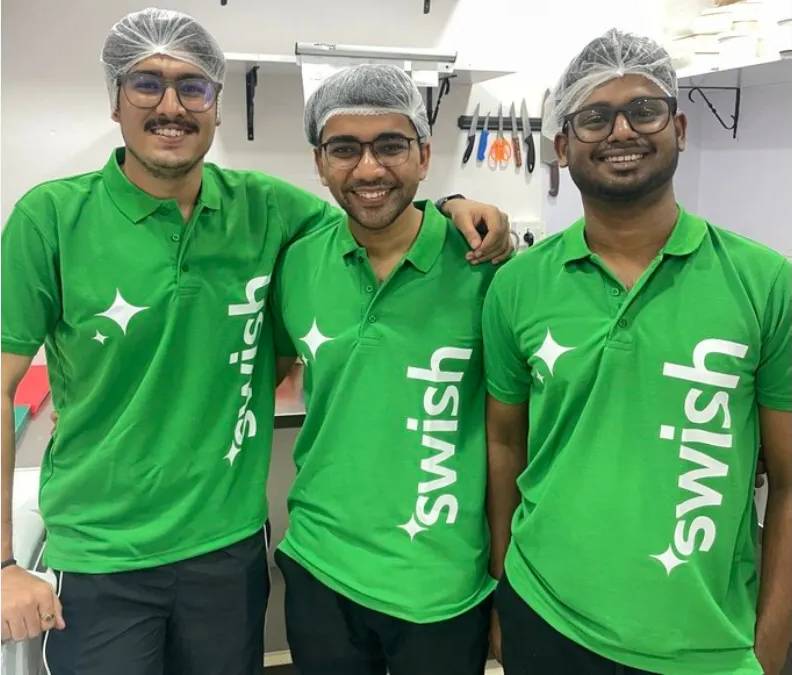
Founded in 2024 by Aniket Shah, Ujjwal Sukheja, and Saran S, Swish has grown quickly. The company raised $38 million from investors such as Accel, Bain Capital Ventures, and Hara Global, with additional support from Alteria Capital and Stride Ventures. With a valuation of around $140 million, the startup plans to expand into new cities, invest in automation, and strengthen its supply chain, particularly in busy areas like Delhi NCR.
The Real Lesson Behind Swish
Swish is not just about fast delivery; it’s about understanding real customer needs. Their journey shows that successful startups emerge from observing everyday problems and solving them effectively. By listening to people and focusing on their daily habits, Swish transformed a simple idea into a fast-growing business that is changing food delivery in India.
 ughts
ughts